
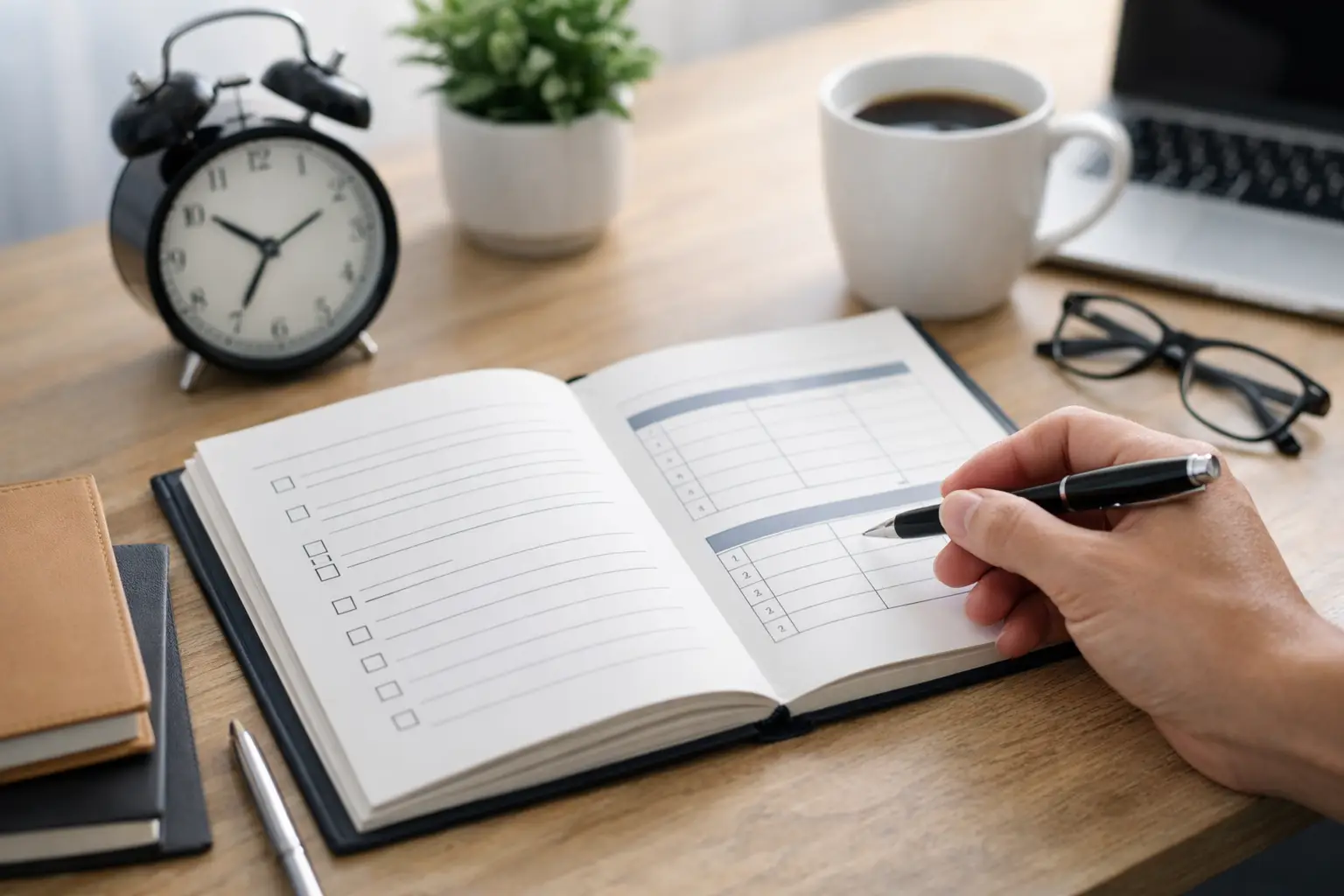
You do not usually fail because you lack motivation. You fail because your good intentions never get a system. A self discipline workbook gives that system a place to live – on paper, in a repeatable routine, and in a format that turns vague goals into actions you can actually follow.
That matters more than most people think. Discipline is often framed like a personality trait, as if some people are naturally consistent and everyone else just needs to try harder. Real life is messier than that. Energy changes, schedules shift, stress shows up, and even strong goals can fade when there is no structure supporting them.
A workbook is not magic, and it is not a replacement for effort. What it does well is reduce friction between intention and follow-through. Instead of asking yourself, What should I do next, every day starts with a clear prompt, a small decision, or a simple checkpoint.
That sounds basic, but basic is often what works. When people stall on self-improvement, it is usually not because the idea is too hard to understand. It is because the process is too loose to repeat. A workbook creates consistency by giving you the same framework over and over until better choices become more automatic.
A strong self discipline workbook usually helps in three ways. First, it defines what discipline means for your actual life. Second, it breaks your goal into actions small enough to repeat. Third, it gives you a record of what happened, so you can adjust instead of guessing.
Most habits feel harder than they are because they stay invisible for too long. You think you are inconsistent, but you have no proof of what is getting in the way. Maybe your goals are unrealistic. Maybe your routine depends on perfect mornings. Maybe you do well for four days, then overload yourself on day five and quit.
A workbook helps you spot those patterns fast. When you write down your plan, track your follow-through, and reflect on missed days without drama, discipline becomes less emotional and more practical. You stop making broad judgments about yourself and start making better adjustments.
That shift matters. If your inner story is I have no willpower, you are likely to give up early. If your story becomes I need a simpler plan for weekdays, now you have something useful to work with.
Not every workbook is built for real life. Some are too abstract, filled with motivational language but light on actual use. Others are so rigid they only work if your schedule is perfectly controlled. The best option sits in the middle. It should guide you without making you feel trapped by the format.
Look for pages that help you clarify one goal at a time. Discipline gets weaker when everything becomes urgent at once. If a workbook asks you to fix your sleep, budget, fitness, productivity, mindset, and screen time all in the same week, it may create more pressure than progress.
It should also include daily or weekly planning space. Reflection matters, but action matters more. Good prompts ask questions like what task matters most today, what obstacle is likely, and what will you do instead of your usual excuse. Those questions keep the workbook grounded in behavior, not just intention.
Tracking pages are useful too, but only if they are simple. A habit tracker with ten categories can look impressive and still fail in practice. A shorter tracker you actually use will deliver better results. Consistency beats complexity almost every time.
They expect the tool to create commitment for them.
A workbook can support discipline, but it cannot choose your priorities. If you buy one because you want a fresh start, that is a good sign. If you buy one hoping it will somehow force you to change, you may be disappointed. The real value comes when you use the workbook to stay honest, not to chase a perfect streak.
This is where trade-offs come in. A detailed workbook can be powerful for people who like structure, but it may feel heavy if you already have a packed schedule. A lighter workbook may be easier to stick with, but it might not offer enough depth if you need more accountability. The right fit depends on whether you need more clarity, more repetition, or more reflection.
Start smaller than your ambition tells you to. That is not lowering your standards. It is building a standard you can keep.
If your goal is to become more disciplined, do not begin with a total life overhaul. Pick one area where better consistency would create visible results. That could be waking up on time, sticking to a spending limit, finishing a daily workout, or following a focused work block each afternoon.
Use the workbook to define the minimum version of success. If your plan only counts when you perform at your best, you will break the habit the first time life gets busy. A stronger plan might look like this: on low-energy days, I still do ten minutes. On stressful days, I still log the result. On missed days, I restart the next day instead of waiting for Monday.
That kind of thinking builds discipline that survives real conditions.
Some sections sound helpful but rarely change behavior. Others quietly become the reason people stay consistent.
The most useful page is often the one that asks why the goal matters right now. Not in a dramatic, life-purpose sense. Just in a clear and personal way. When the reason is specific, discipline holds up better. Save $300 this month so you stop relying on your credit card is stronger than be better with money. Walk 20 minutes after work so your evenings feel less sluggish is stronger than get healthy.
Obstacle planning is another high-value section. Many people write goals as if nothing will interrupt them. A better workbook expects obstacles and plans around them. If you know your weak point is late-night scrolling, skipped meal prep, or procrastinating on hard tasks, the workbook should help you choose a response before the moment hits.
Finally, weekly review pages matter more than people expect. This is where you stop reacting and start learning. You can see whether your goal was realistic, whether your environment helped or hurt, and whether your plan needs to be simplified. Progress gets faster when you review without guilt.
Apps are convenient, and for some people they are enough. But discipline often improves faster when the process is tactile and harder to ignore. Writing things down slows you just enough to be intentional. It also creates a stronger sense of commitment because you are not just tapping a checkbox and moving on.
There is another practical benefit. Phones contain both your productivity tools and your distractions. If you open an app to check your goals and end up on social media ten seconds later, the system is working against you. A workbook removes that problem.
That said, it depends on your style. If you travel often or need reminders on the go, a digital system may fit better. If you are trying to reduce screen dependence and create a focused routine, a physical or printable workbook can be a smarter choice.
Beginners usually see the fastest gains because the workbook gives them a starting point they did not have before. Instead of collecting random advice, they follow one method long enough to learn what actually helps.
But intermediate self-improvement shoppers benefit too, especially if they already know what to do and still struggle to do it consistently. That gap between knowledge and action is exactly where a workbook earns its place. It turns awareness into practice.
This is also why these tools fit so well into a lifestyle-upgrade mindset. Better discipline is not only about getting more done. It affects how you manage money, protect your time, build healthier routines, and make smarter choices under pressure. One simple tool can create momentum across several areas of life.
If you want results, choose a self discipline workbook you can picture yourself using on an ordinary Tuesday, not just during a burst of motivation. The best system is the one that still works when your schedule is busy, your energy is average, and your enthusiasm is lower than usual. That is where real discipline starts – not with intensity, but with repeatable action. Your next level starts with something simple enough to use and strong enough to keep you moving.









Leave a comment